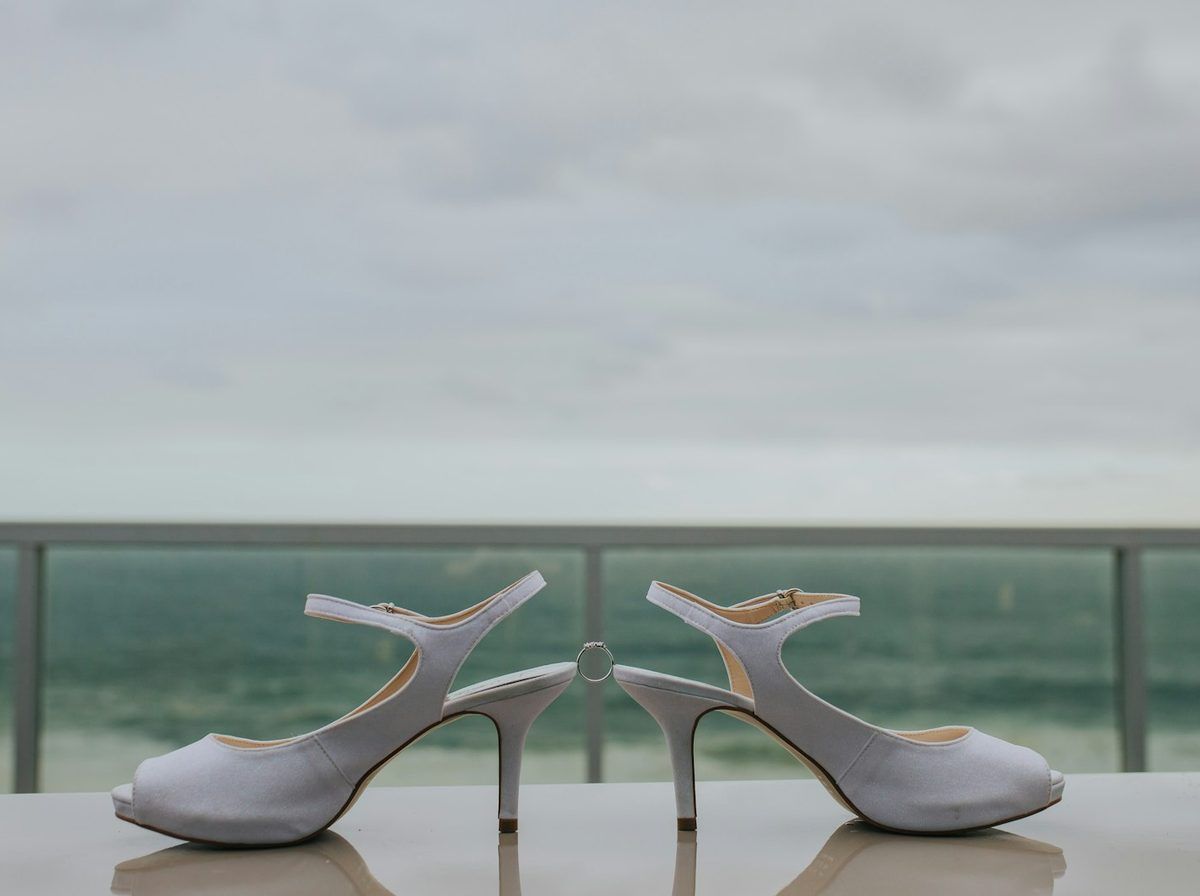
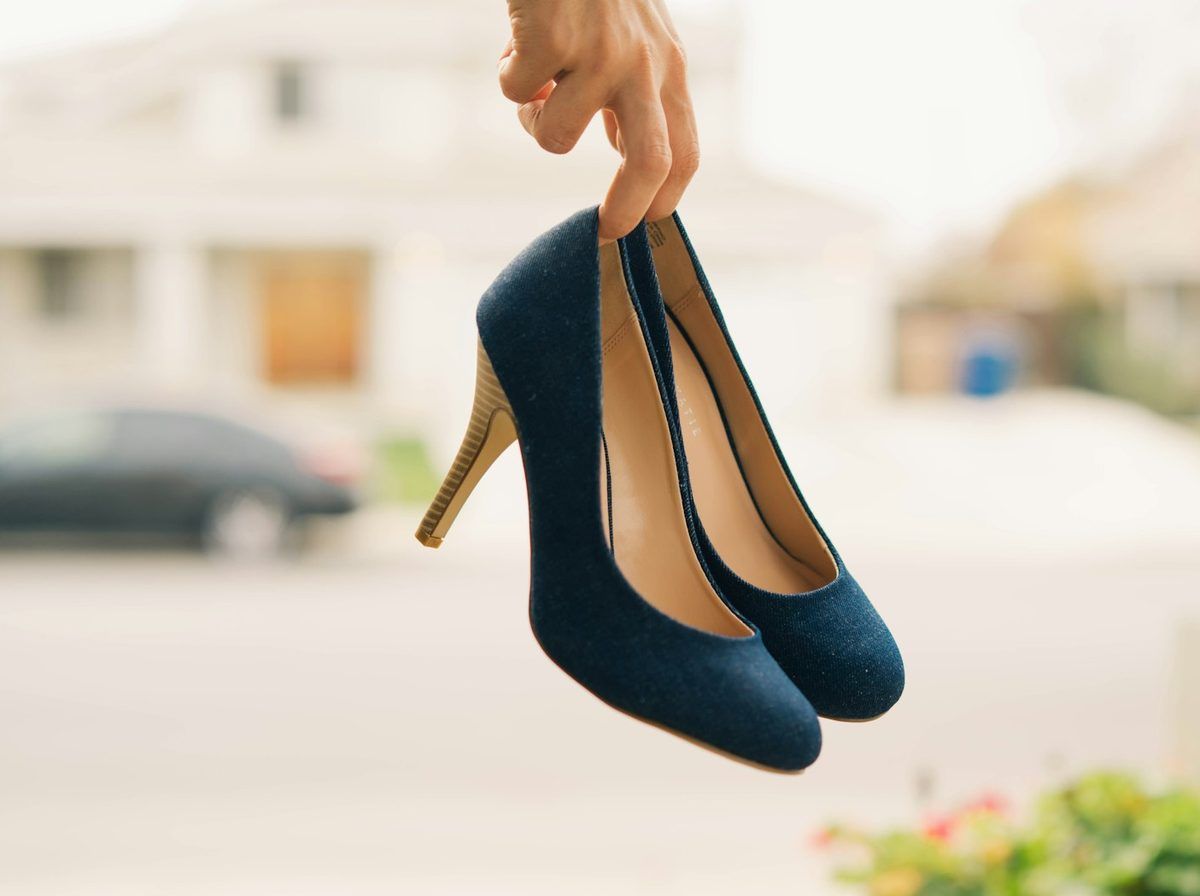
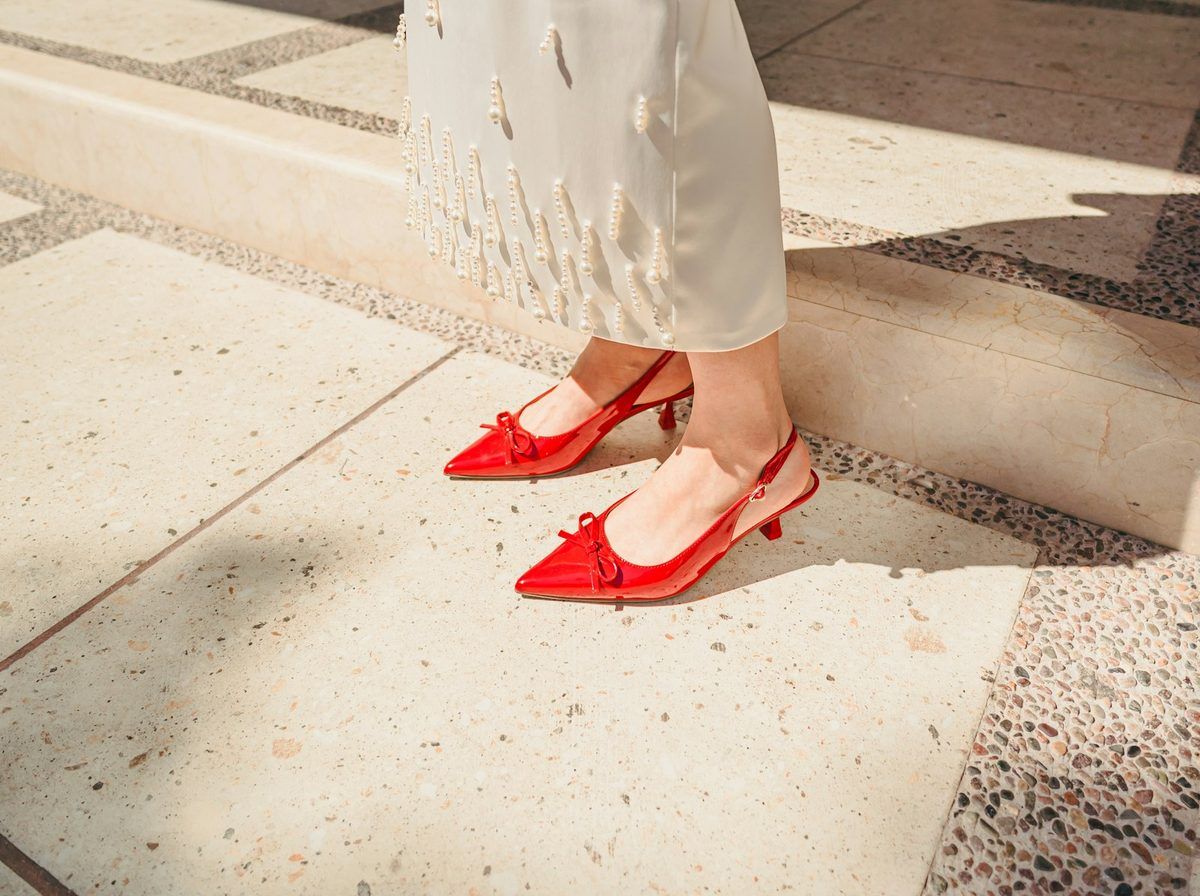
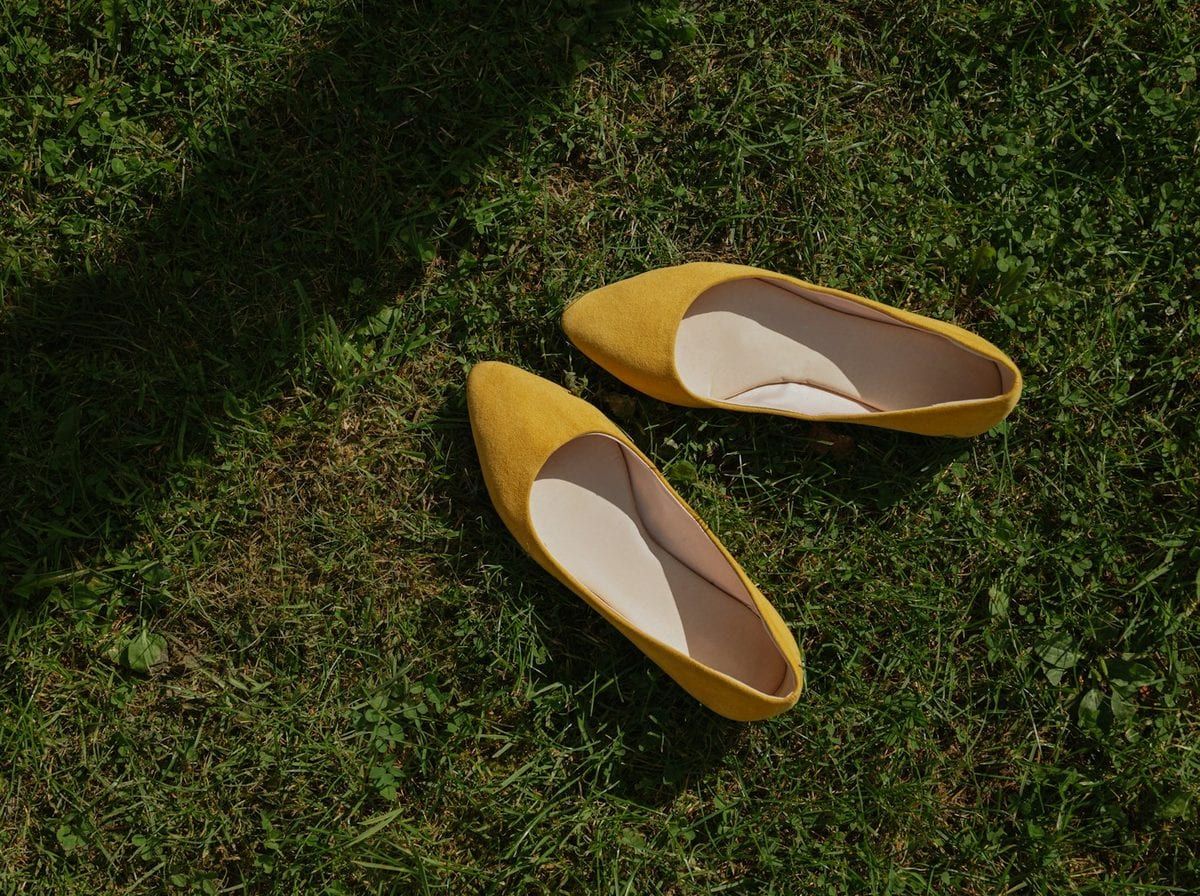
Choose wedding guest shoes by the dress code first and the venue second: satin pumps or strappy heels for black tie, block heels or low heels for cocktail and outdoor weddings, dressy flats for anything with a long dance floor. If the ceremony is on grass, sand or cobblestones, a block heel or flat beats a stiletto every time.
Updated Oct 24, 2026 · By Jenisha Jonchhe
Photo: Fernanda Nuso on Unsplash
This page may contain affiliate links. If you buy something through one, we may earn a commission at no extra cost to you. Read our affiliate disclosure.
Satin pointed-toe heels with adjustable straps on a heel the listing gives as 3 inches, in sizes 6 to 10.
Satin pointed-toe heels with adjustable straps on a heel the listing gives as 3 inches (7.5 cm). Listing details: satin upper and rubber sole; sizes 6 to 10.
Faux leather block-heel sandals with an adjustable ankle strap on a 2 1/8-inch heel, in regular and wide widths, sizes 5 to 13.
Block-heel sandals with an adjustable ankle strap and a padded memory foam insole, on a 2 1/8-inch heel (size 6), in regular and wide widths, sizes 5 to 13. Listing details: faux leather upper.
Foam heel grips topped with microsuede, sold in 4- and 6-pair packs; the listing says they help keep the heel from slipping.
Self-adhesive heel grips in foam topped with microsuede, sold in 4- and 6-pair packs; the listing says they help keep the heel in place and stop slipping.
Foldable bow ballet flats that come with a storage bag, in sizes 6 to 11 with wide widths listed.
Foldable bow ballet flats with a cushioned insole and travel bag, offered in Hot Pink and Red. Listing details: faux leather upper and polyvinyl chloride sole; sizes 6 to 11 (wide widths also listed).
Picks for this guide come from Amazon listing information, and none of them has been tried on. Heel height, heel shape, closure, materials and size range are what each listing states, and any comfort feature, such as a cushioned insole, is the listing's own description. Check each size chart before you order.
What the evidence label on each pick means
Researched
selected from product information only; not tried on.
Buying considerations
Choose wedding guest shoes by the dress code first and the venue second: satin pumps or strappy heels for black tie, block heels or low heels for cocktail and outdoor weddings, dressy flats for anything with a long dance floor. If the ceremony is on grass, sand or cobblestones, a block heel or flat beats a stiletto every time.
A wedding is a long day on your feet: a ceremony, photos, a cocktail hour standing up and hours of dancing. The best shoes look right with the dress and still feel fine at eleven at night. Here's how to choose by code, by venue and by season.
Wedding guest shoes by dress code
Start with the invitation. Shoes follow the same logic as the dress: the more formal the code, the dressier the shoe. These are common guidelines, not rules, and the couple's wording always comes first.
Black tie: satin or patent pumps, strappy heeled sandals, or embellished dressy flats. Skip casual sandals, wedges and anything rubber-soled.
Black tie optional: the same dressy heels, or a sleek low heel or kitten heel. Skip wedges and casual flats.
Cocktail: block heels, slingbacks, low heels or dressy flats. Skip flip-flops and sneakers.
Semi-formal: much like cocktail, with a little more room for color and texture. Skip anything beachy unless the venue is.
Dressy casual: block-heel sandals, loafers with a polished finish, dressy flats, heeled ankle boots in cool months. Skip athletic shoes.
Beach: flat dressy sandals, low wedges or barefoot-friendly sandals. Skip stilettos, which sink.
For what a code means for the dress itself, start with our guide to cocktail attire, a code you'll see on plenty of invitations. If you're heading to the coast, the beach wedding guest dresses guide covers sand-friendly outfits.
Comfortable wedding guest shoes
Comfortable wedding guest shoes come down to three things: a heel you can stand on for hours, a strap or shape that keeps the shoe on, and a fit that's right before the day. Most comfortable heels for a wedding have a wider or lower heel than a stiletto, a closed back or ankle strap, and a little cushioning underfoot. Here are the three styles to know.
Block heels for a wedding guest
Block heels for a wedding guest are the most useful dressy heel there is. The wide heel spreads your weight, so it's steadier on grass and old floors and easier to stand in through a long cocktail hour. A block-heel sandal with an ankle strap suits cocktail, semi-formal and outdoor weddings from spring through early fall, and a block-heel pump works year-round. Keep the heel slim enough to look dressy; very chunky platforms read as a night out, not a wedding.
Low heel wedding guest shoes
Low heel wedding guest shoes, around an inch or two, give you a heel's polish without the strain. Wedding guest heels in this range include kitten heel slingbacks and pumps, low block heels and low strappy sandals. A pointed toe keeps them looking dressy with a midi or a gown. Our guide to kitten heels goes deeper on the slim, low heel that suits wedding dresses especially well.
Dressy flats
Dressy flats are fine at every dress code, black tie included, if they look the part: satin, velvet, metallic leather, a pointed toe or a bit of embellishment. They're the obvious choice if you plan to dance all night, if you're pregnant, or if heels simply aren't your thing. Satin ballet flats with a slip dress or a floor-length gown look intentional, not like a compromise.
Shoes by venue
The ground matters as much as the dress code:
Grass and lawns: block heels, wedges or flats. Stilettos sink into the turf and pick up mud.
Sand: flat sandals, or go barefoot if the couple suggests it. Anything with a heel struggles.
Cobblestones and old churches: block heels or flats with a grippy sole. Thin heels catch in gaps and slip on worn stone.
A barn or farm: block heels, heeled ankle boots or dressy flats. Expect gravel paths and wooden floors.
A ballroom or hotel: this is the place for stilettos and strappy sandals, since the floors are smooth and there are seats nearby when your feet need a break.
If the ceremony and reception are in different places, plan for the harder of the two, or bring a second pair.
Choosing a shoe color
Once the style is settled, color is the easy part. A shade close to your skin tone lengthens the leg and goes with every dress, which makes it the safest choice if you'll wear the shoes to more than one wedding this year. Metallic gold, silver or rose gold works like a neutral at evening weddings and adds a little festivity. Matching the shoe to the dress looks sleek with a jewel-tone gown, and a contrasting color, such as a red shoe with a navy dress, looks deliberate when it repeats in your clutch or jewelry. For a deeper dress color, our guide to shoes for a burgundy dress has specific pairings.
Winter wedding guest shoes
Winter wedding guest shoes have to deal with cold walks, wet steps and tights. Closed pumps with sheer tights look polished with a midi or a long-sleeve dress. Heeled ankle boots work with a midi at a dressy casual, barn or semi-formal winter wedding; keep them sleek, with a slim shaft and a block or kitten heel. Velvet or satin pumps feel festive in December.
For a snowy or icy day, wear boots for the walk in and change into your dress shoes at the venue. For outfit ideas, see our guide to winter wedding guest dresses.
Making any pair last the night
A few simple habits make almost any wedding shoe easier to wear:
Fix the fit first. If a heel slips, a heel grip inside the back stops it. A ball-of-foot cushion helps if your foot slides forward in a high heel.
Bring a fold-up flat. Foldable flats fit in a larger clutch or a tote you leave at the table, and you can switch for the dance floor.
Put cushions in a few days early so they're set and you know where they sit, then wear the shoes around the house for an evening. You'll find any rubbing while there's still time to fix it.
Check the soles. A brand-new smooth sole can be slippery on a polished dance floor. Scuff it lightly on pavement before the day, or choose a pair with a textured or rubber-tipped sole.
The day before, check the forecast and the ground once more. Rain turns a lawn soft and a cobbled path slick, so the block heel or flat you were saving for dancing may be the better pair for the ceremony too.
Can you wear flats to a wedding as a guest?
Yes. Dressy flats in satin, velvet or metallic leather are fine at any dress code, including black tie, as long as they look as polished as the dress.
Can you wear boots to a wedding?
Sleek heeled ankle boots work at fall and winter weddings, especially barn, rustic or dressy casual ones. For black tie, choose pumps or dressy heels instead.
What color shoes go with a wedding guest dress?
A shade close to your skin tone, a metallic, or a color pulled from the dress all work. Black is fine for an evening wedding.
Is it OK to change shoes at a wedding?
Yes. Plenty of guests switch to flats for the reception and dancing. Keep the second pair in a bag or at your table.
Share this guide
Written by
Jenisha JonchheFashion Writer and Designer
Jenisha Jonchhe is a New York-based fashion writer and designer with academic training in fashion design and postgraduate study focused on fast fashion. At LookerDress, she creates practical, research-led content covering occasion dressing, dress codes, fit and sizing, fabrics, seasonal trends, styling and product comparisons. Her fashion background helps her assess garment construction, silhouette, materials, wearability and styling suitability. She translates this knowledge into clear, accessible guidance that helps readers make more informed clothing and accessory choices. Jenisha's articles distinguish between editorial research and products that have been personally examined or tested. Product details, sizing information and availability are checked against current retailer information before publication. Areas of expertise: fashion design, fast fashion, garment construction, dress styling, fabrics, fit and sizing, trend analysis and fashion buying guides.
Academic training in fashion design; postgraduate study focused on fast fashion.
Heel grips are cushioned pads, usually silicone, gel or fabric-covered foam, that stick to the inside back of a shoe and fill the gap so your heel stays put. They work best when a shoe is slightly too big or slips when you walk; if the whole shoe is loose, a half or full insole helps more.
Kitten heels are short, slim heels, usually about one to two inches high, set in from the back of the shoe. They give a dress the polish of a heel without the height, and they look best with midi, knee-length and slip dresses, where a chunky shoe would feel heavy.
Ballet flats go with almost any dress that ends at or below the knee, from a knit midi to a satin slip, and they're the shoe to wear with sheer or colored tights in winter. Choose the material by the occasion: leather for daily wear, satin for evenings and mesh for warm days.