Chiffon is a sheer, lightweight fabric woven from tightly twisted yarns, which gives it a soft, floaty drape and a faint texture. It started as a silk fabric, but it's now commonly made from polyester, which makes it more affordable, and silk chiffon sits at the pricier end.
Updated Nov 1, 2026 · By Jenisha Jonchhe
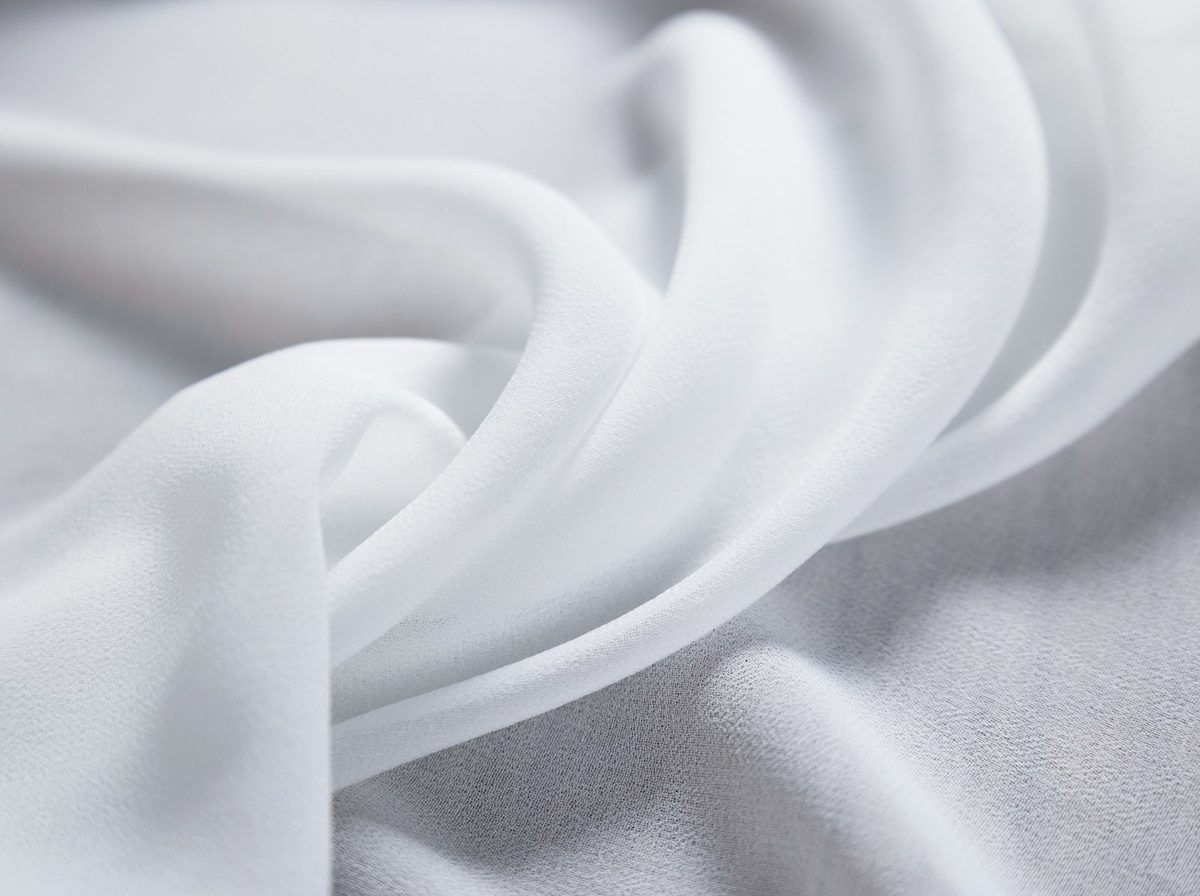
Photo: OneYard Fabric on Unsplash
This page may contain affiliate links. If you buy something through one, we may earn a commission at no extra cost to you. Read our affiliate disclosure.
Chiffon is a sheer, lightweight fabric woven from tightly twisted yarns, which gives it a soft, floaty drape and a faint texture. It started as a silk fabric, but it's now commonly made from polyester, which makes it more affordable, and silk chiffon sits at the pricier end.
It's the fabric behind bridesmaid dresses, flutter sleeves and those maxi skirts that lift in a breeze. Once you know what it's made of and how it differs from georgette, it's an easy fabric to buy well and keep looking good.
What chiffon is made of
Chiffon names a weave, not a fiber. It's a plain weave (one thread over, one under) made from yarns twisted very tightly before weaving. That twist is what makes the fabric light, fluid and see-through. Plenty of dress fabrics work this way; velvet and velour are also named for how they're made, not what they're made of.
Chiffon started as silk and is now commonly made from polyester, and the word describes the weave, so a label can say silk chiffon, polyester chiffon or another synthetic. The fiber line on the care label tells you which.
Silk chiffon and polyester chiffon
Silk chiffon is the original: very light, soft, and fluid enough to pour off a hanger. Polyester chiffon is the more affordable version, and it's the one you'll find on a lot of dresses. Here's how they compare:
Feel: silk chiffon is softer and warms to the skin. Polyester chiffon is a little crisper and can feel slightly slippery.
Breathability: silk breathes better. Polyester holds more heat on a hot day.
Wrinkles: silk chiffon creases more easily. Polyester chiffon shrugs off folds better.
Heat: both need a low iron. Silk scorches; polyester can melt or glaze.
Care: silk chiffon usually goes to a cleaner. Polyester chiffon usually hand washes cool.
Where you see it: silk in bridal and designer evening wear; polyester in bridesmaid, prom and everyday flowy dresses.
Price: silk costs more, often by a lot.
If you're weighing silk against cheaper shiny fabrics more generally, our satin vs silk guide covers the same fiber question for satin.
How chiffon looks and moves
Chiffon is sheer: a single layer lets light and skin show through. It has only a soft sheen, never the bright shine of satin, and it floats away from the body instead of clinging, so a chiffon skirt moves when you walk and lifts in the wind. That airiness is why chiffon dresses are almost always lined or layered, with several layers in a skirt and a lining under the bodice.
To spot chiffon on a rack:
Hold it up to the light. You'll see through a single layer easily.
Rub it between your fingers. It feels light, with a faint texture from the twisted yarns.
Gather a handful and let it drop. Chiffon falls slowly and softly, without stiff folds.
Chiffon vs georgette
Chiffon vs georgette is the comparison that trips people up, because both are sheer, both use twisted yarns and both are used in flowy dresses. The differences:
Weight: georgette is heavier. Chiffon is lighter.
Sheerness: georgette is semi-sheer and gives more coverage. Chiffon is more see-through.
Texture: georgette has a crinkled, grainy surface and a matte finish. Chiffon is smoother, with a slight sheen.
Drape: georgette is bouncier and holds a bit more shape. Chiffon floats.
Durability: georgette is a little stronger, so it handles beading and embroidery better. Chiffon is more delicate.
Best dress use: georgette for printed day dresses and embellished pieces; chiffon for layered skirts, sleeves and overlays.
Shops mix the names up, partly because polyester versions of both can feel similar. If a listing names one, look at how sheer the photos show it and whether the skirt is lined.
Chiffon, organza and tulle
Organza is a sheer plain weave too, but much stiffer. It holds its shape, so it's used for bows, sashes and structured overlays on gowns rather than floaty skirts.
Tulle is a fine mesh netting, from soft to stiff, used for veils and for the layers that puff out a full, bell-shaped skirt.
Where a chiffon dress makes sense
A chiffon dress suits any event where you want movement and a light, romantic look: daytime weddings, bridesmaid lines, beach and garden parties, and evening gowns with layered skirts. It's less suited to a winter day outdoors or a crowded night out where snags are likely.
Daytime and spring events
For spring, chiffon is everywhere for good reason. Flutter sleeves, a midi or maxi length and a soft print feel right at a garden ceremony or a shower. Choose a lined skirt, because daylight is unforgiving with sheer fabric. Our guide to spring wedding guest dresses has more on colors and lengths for the season.
At a beach wedding, a chiffon maxi is a classic. Keep the hem just off the ground so it doesn't drag in sand. Our guide to beach wedding guest dresses covers beach formal, packing and shoes for sand.
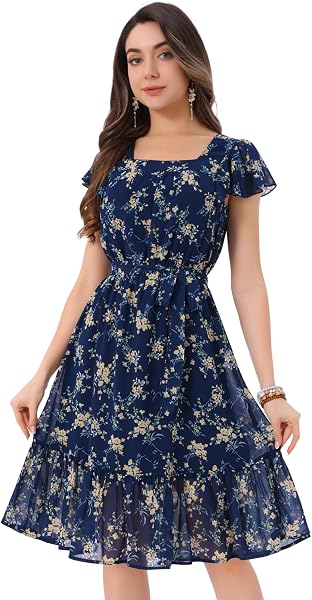
A floral chiffon midi with flutter sleeves, a square neck, a self-tie belt and an elastic waist; the listing says it is lined and falls to mid-calf on a 5'4" wearer. Listing details: polyester; sizes X-Small to X-Large; machine wash cold.
A floor-length chiffon gown is a formal staple, from black tie weddings to galas. The layered skirt moves beautifully, and a lined bodice gives it structure. For a more relaxed evening, a chiffon midi with a fitted waist suits rehearsal dinner dresses and cocktail receptions.
Sheer chiffon sleeves look elegant but don't keep you warm. For a cool venue, bring a wrap.
A floor-length chiffon gown with full lining, a padded bust, floral appliqués at the waist, short ruffle sleeves and a hidden back zipper. Listing details: sizes 4 to 26; hand wash only.
A long-sleeve chiffon gown the listing describes as floor length, lined and made for formal wedding guests, in sizes 2 to 26. Listing details: shell and lining polyester; hand wash only.
Check the lining before you buy. A chiffon dress should have at least a lined bodice and a lined skirt, or several skirt layers. Hold it to a window: if you can see your hand clearly through the skirt, plan to add something underneath.
A half slip is the easy fix for a sheer skirt; choose one close to the dress's length so it doesn't show at the hem. Our guide to half slips for dresses helps you pick a length and a fabric. Underwear close to your skin tone disappears under pale chiffon better than white does.
An A-line nylon half slip with a gathered elastic waistband and a lace hem, offered in lengths from 14 to 34 inches and sizes X-Small to 3X-Large; the listing describes the fabric as anti-static. Listing details: machine wash.
Follow the care label first. As a rule, polyester chiffon can usually be hand washed in cool water with a mild detergent, swished gently, pressed in a towel and hung to dry. Silk chiffon usually goes to a cleaner, and so does any chiffon dress with beading or a structured bodice.
Steam out wrinkles on a low setting, from a short distance. If you must iron, use the lowest setting with a pressing cloth, because a hot iron can melt polyester chiffon or scorch silk.
Chiffon snags easily, so store it hanging in a breathable garment bag, away from velcro, rough bags and jewelry with sharp edges, and fasten bracelets before you put the dress on.
A 1,000-watt dual-voltage handheld steamer with a dry-ironing plate, a 5 oz water tank and a rotating steam head; the listing says to choose the wrinkle-release mode that suits the fabric and lists silk, lace and organza among them.
Jenisha Jonchhe is a New York-based fashion writer and designer with academic training in fashion design and postgraduate study focused on fast fashion. At LookerDress, she creates practical, research-led content covering occasion dressing, dress codes, fit and sizing, fabrics, seasonal trends, styling and product comparisons. Her fashion background helps her assess garment construction, silhouette, materials, wearability and styling suitability. She translates this knowledge into clear, accessible guidance that helps readers make more informed clothing and accessory choices. Jenisha's articles distinguish between editorial research and products that have been personally examined or tested. Product details, sizing information and availability are checked against current retailer information before publication. Areas of expertise: fashion design, fast fashion, garment construction, dress styling, fabrics, fit and sizing, trend analysis and fashion buying guides.
Academic training in fashion design; postgraduate study focused on fast fashion.
Viscose is a fiber made by dissolving plant cellulose, usually from wood pulp, and spinning it back into threads; it's the main type of rayon, and US labels may use either name. Viscose dresses drape softly and feel cool, but the fabric can shrink and wrinkle, so wash it gently and cool.
Acetate is a semi-synthetic fiber made from cellulose, usually wood pulp, treated to form cellulose acetate and spun into a smooth, shiny thread. It gives satin dresses and linings a silk-like look and drape at a lower cost, but it's weaker than polyester and sensitive to heat.
Silk is a natural fiber; satin is a weave with a smooth, shiny face that can be made from silk, polyester, acetate or nylon. So a satin dress can be silk, but polyester satin is widely used for dresses, and the label's fiber content tells you which.